Representative Case Study: this scenario illustrates how IFBrand Sourcing manages comparable product-development and manufacturing requirements. Client identity and commercially sensitive details are intentionally anonymized.
Project Overview – Turning Separate Pet Accessories into One Travel System
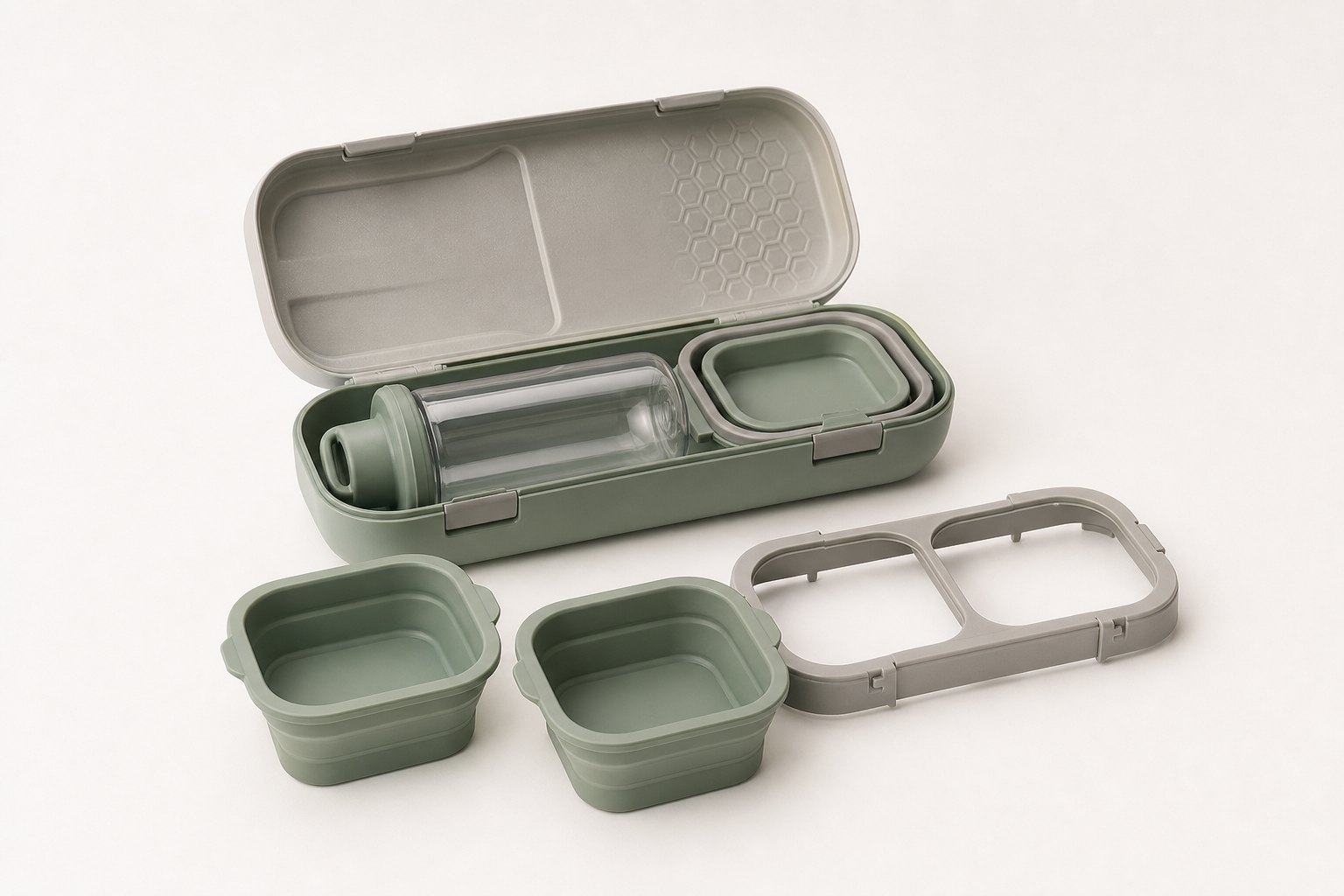
This representative project begins with a common ecommerce challenge: a pet brand wants to offer a travel-feeding product that feels genuinely useful, rather than bundling several generic accessories in a bag. The intended system must carry clean water, provide separate food and water bowls, pack into a small footprint and remain easy to clean after outdoor use.
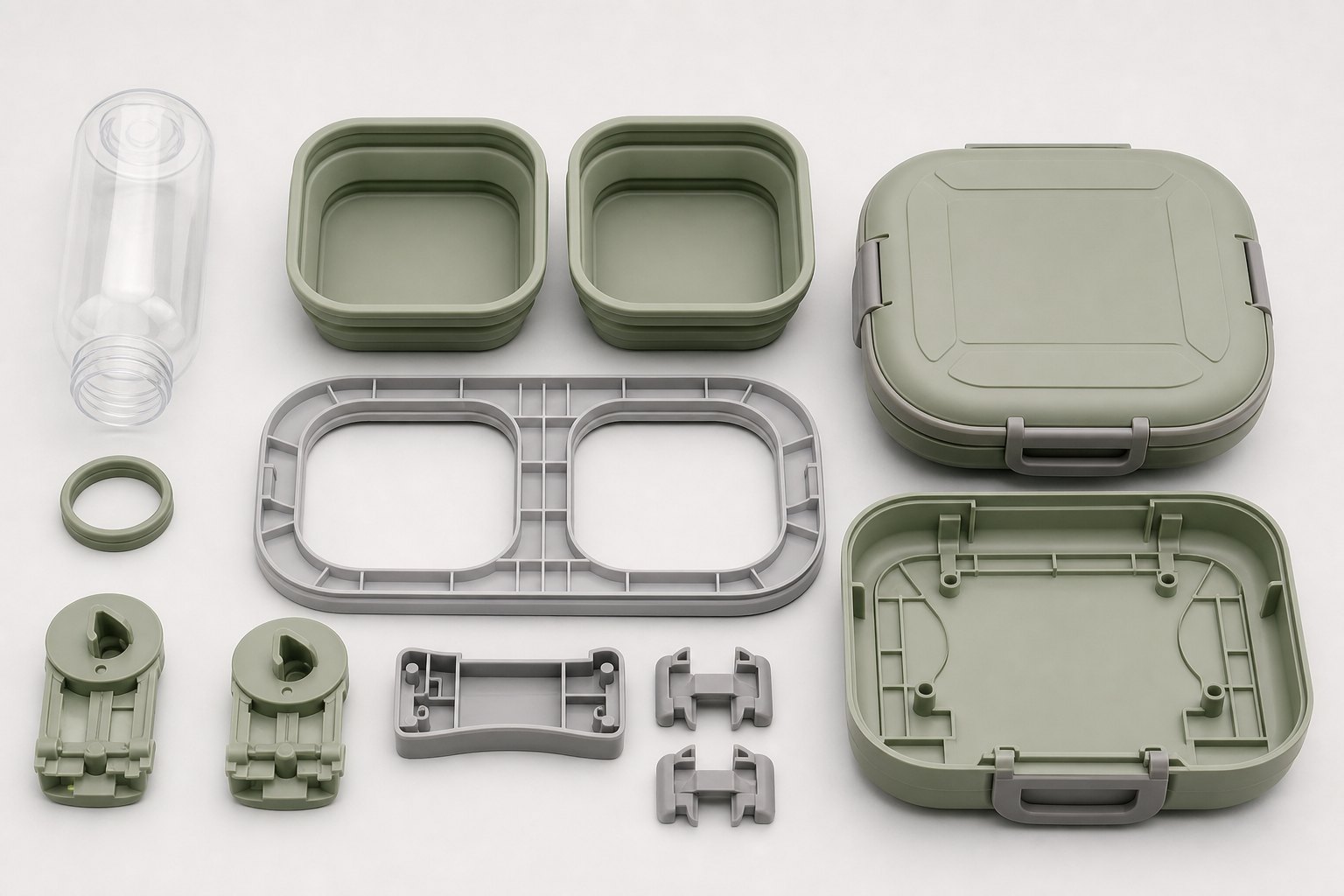
The concept combines four manufacturing streams: a clear water bottle, two collapsible silicone bowls, an injection-molded locking frame and a protective carry shell. Each part is simple in isolation, but the complete product depends on reliable nesting, controlled compression, leak management and repeatable assembly across suppliers.
- Two food-contact silicone bowls with controlled collapse force
- A transparent bottle with a replaceable seal and protected outlet
- A rigid PP frame that supports the bowls when expanded
- A compact carry case with snap latches and internal retention features
- A common color standard across silicone and injection-molded plastic
Initial Risk Review – The Product Is Only as Strong as Its Interfaces
The first engineering review focuses on interfaces rather than appearance. A bowl that is too soft may collapse during use; a bowl that is too hard will not fold neatly into the case. The bottle seal must prevent leakage during transport without requiring excessive opening force. The molded frame must support repeated assembly while staying within a consumer-friendly weight.
Tolerance accumulation is another concern. Silicone shrinkage, bottle-neck dimensions and molded latch positions come from different processes. If every supplier works only to its own drawing, the final parts may all pass inspection yet fail when assembled. We therefore build one shared interface-control file covering critical dimensions, compression targets and approved sample references.
Our Development Approach
The product architecture is divided into functional modules. The silicone bowls are evaluated through hardness and wall-thickness samples before their final fold geometry is frozen. The PP frame receives ribs only where load transfer is required, avoiding unnecessary weight and sink marks. The bottle outlet and seal are tested as a subsystem before being fitted into the carry shell.
Supplier selection is based on process capability, not a single bundled quote. We compare silicone compression molding, plastic injection molding and bottle production separately, then nominate an assembly partner with the ability to control incoming parts. This makes costs transparent and reduces dependence on one vendor claiming to manage processes it does not perform in-house.
- 3D packaging study to confirm every component can nest without interference
- DFM review for parting lines, draft, ribs, latch travel and ejector locations
- Hardness ladder samples for bowl comfort, stability and fold memory
- Seal-compression trials using the maximum and minimum bottle-neck tolerances
- Golden-sample assembly used as the cross-supplier reference
Engineering Challenges and Practical Solutions
Balancing Bowl Stability and Collapsibility
Instead of selecting silicone hardness from a catalog, the design is validated with several wall profiles. A stepped wall controls where the bowl folds, while a reinforced rim prevents the open bowl from twisting. The PP frame supports the rim rather than squeezing the bowl body, which keeps the user experience consistent after repeated cycles.
Preventing Leaks without Creating a Difficult Cap
The bottle interface uses a defined gasket-compression window. Groove depth, seal hardness and closure travel are reviewed together so that the seal remains effective at tolerance limits. Pilot units undergo inverted storage, vibration and repeated opening tests before the design is approved for production tooling.
Color Matching across Silicone and PP
The same color code does not automatically produce the same visual result in different materials. We establish a physical master under controlled lighting and approve an acceptable range for matte silicone and textured PP separately. Production inspections compare parts to the correct material master instead of relying only on digital color values.
Assembly and Quality-Control Plan
Incoming inspection verifies silicone hardness, key dimensions, bottle sealing surfaces and latch geometry before assembly begins. The line uses simple go/no-go fixtures for interfaces that affect fit. Operators follow a defined sequence so the gasket cannot be omitted and the bowls are seated without distortion.
Final checks include visual standards, latch cycling, packed-product movement, leak testing on a defined sample plan and carton drop validation. The inspection report connects every result to the approved golden sample, packaging specification and current drawing revision.
Outcome – A Production-Ready Multi-Supplier Product File
The representative outcome is more than an attractive sample. It is a controlled product file that links silicone specifications, molded-part drawings, seal requirements, color masters, assembly instructions and inspection criteria. That file allows the brand to quote production accurately, compare suppliers and reorder without rebuilding product knowledge from scattered messages.
The same modular platform can also support future variants, such as different bowl sizes, replacement seals or new colorways, while protecting the key interfaces that make the system reliable.
How IFBrand Sourcing Supports Similar Projects
A project like this connects several disciplines. IFBrand Sourcing can support product design and DFM, supplier sourcing and factory evaluation, mass manufacturing management, and shipping and warehousing coordination. Visit our end-to-end process or contact the team to discuss a product brief.