
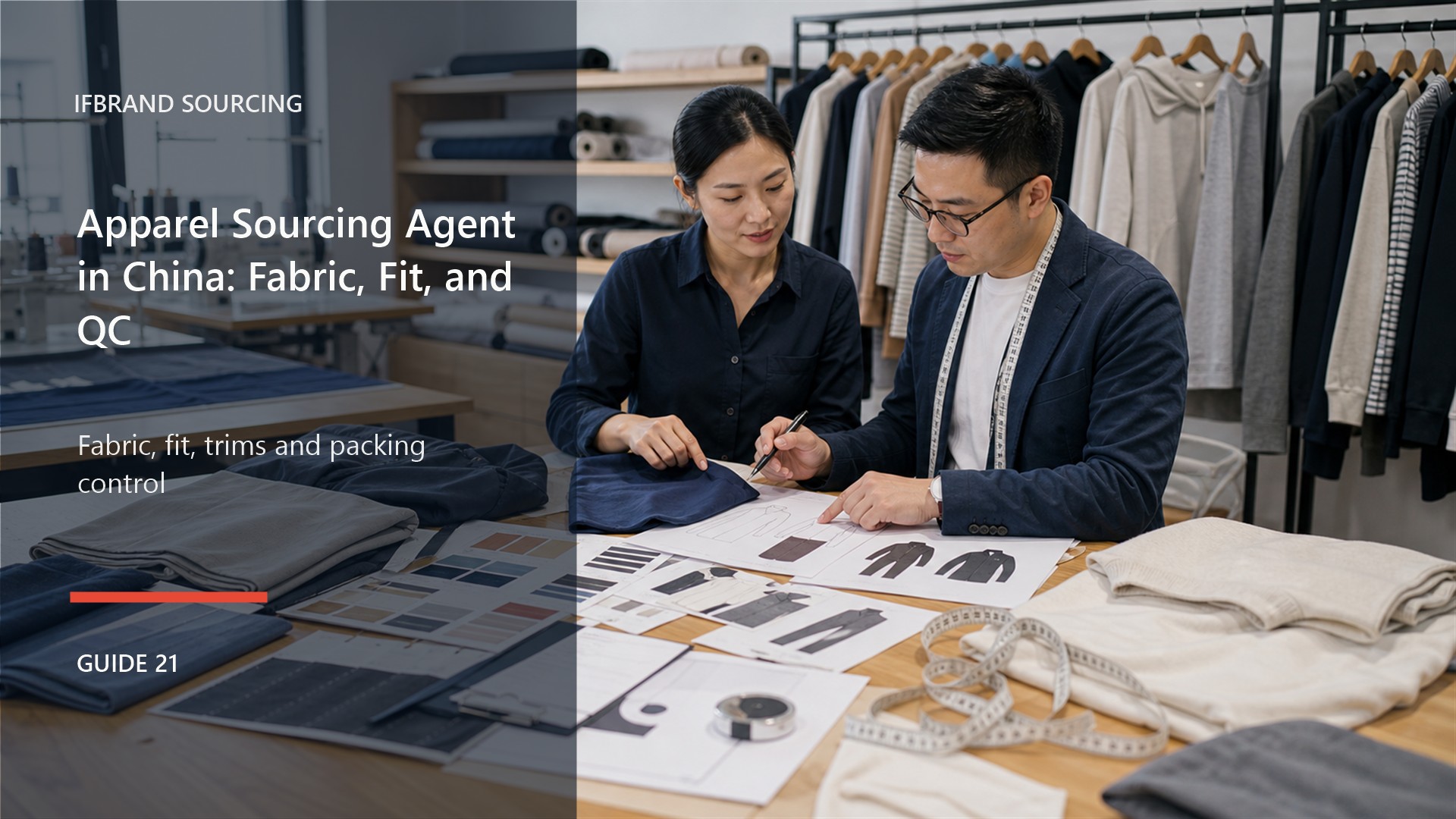
Apparel Sourcing Agent in China: Fabric, Fit, and QC
Updated: July 6, 2026. Written for buyers planning apparel sourcing in China with China suppliers, including ecommerce founders, import managers, Amazon sellers, Shopify teams, and private label operators.
Apparel sourcing depends on fabric, fit, stitching, trims, labels, shade control, and packing ratio. A sourcing agent helps translate the brand’s design into a sample and production file that a factory can follow.
The biggest apparel mistakes usually come from unclear measurement points, fabric substitutions, or approving a sample without size tolerance notes.
Table of Contents
- Apparel starts with a usable tech pack
- Factory fit by garment category
- Sampling fit, fabric, and trims
- MOQ pressure in fabric and color
- Inspection points for garments
- When apparel sourcing needs more preparation
- FAQ
Apparel starts with a usable tech pack
For apparel sourcing in China, the first buying decision should be based on tech pack, size chart, measurement points, fabric reference, trim list, care label, and packing ratio, not on a catalog photo or a fast supplier reply. The written standard should name the quantity range, destination market, packaging expectation, and the parts of fabric hand feel, shrinkage concern, stitching, seam strength, trims, labels, and fit measurements that cannot change after approval.
The expensive mistakes usually hide inside fabric MOQ, color minimums, trim sourcing, sample rounds, cutting loss, and packaging. IFBrand uses sample comments, measurement records, and fabric approval notes to keep quote versions, sample decisions, and supplier promises tied to one buying file before a deposit is released.
Factory fit by garment category
Supplier selection for apparel sourcing in China should test category fit, process ownership, sample capability, export experience, and whether the contact can explain how the product is actually made. Fast communication helps, but the supplier still has to prove control over measurements, stitching, shade, stains, labels, packing ratio, and carton assortment.
The warning signs vary by category, but the practical pattern is similar: vague answers around fabric hand feel, shrinkage concern, stitching, seam strength, trims, labels, and fit measurements, unclear responsibility for measurements, stitching, shade, stains, labels, packing ratio, and carton assortment, or a price that only works if the supplier quietly changes the specification. Platform discovery gives the buyer options; verification turns those options into a controlled order for apparel sourcing in China.
Sampling fit, fabric, and trims
Sample approval for apparel sourcing in China should work like a small technical audit. The buyer should check fabric hand feel, shrinkage concern, stitching, seam strength, trims, labels, and fit measurements, then save photos, measurements, supplier comments, and packaging notes in one approval record.
The sample file should also record exceptions. If artwork is temporary, if packaging is still being revised, or if tech pack, size chart, measurement points, fabric reference, trim list, care label, and packing ratio will be updated before mass production, those limits need to be written down so the factory does not treat a rough sample as final.
MOQ pressure in fabric and color
Cost control is not simply a request for a lower unit price. In apparel sourcing in China, the real quote drivers are fabric MOQ, color minimums, trim sourcing, sample rounds, cutting loss, and packaging, and each one can change the landed cost or the customer experience.
When IFBrand connects product sourcing support, mass manufacturing support, and shipping and warehousing support, the buyer can evaluate fabric MOQ, color minimums, trim sourcing, sample rounds, cutting loss, and packaging together with supplier choice, packaging decisions, inspection risk, and freight planning.
Inspection points for garments

Quality control for apparel sourcing in China should be planned before deposit. The inspection standard should name critical, major, and minor defects, then include the category checks that matter most: measurements, stitching, shade, stains, labels, packing ratio, and carton assortment.
Production follow-up for apparel sourcing in China should request evidence that matches the risk: sample comments, measurement records, and fabric approval notes, sample status, packaging proof, finished-goods count, and carton information before the balance payment is discussed.
When apparel sourcing needs more preparation
This article is most relevant for fashion, fitness, workwear, and merch brands with custom garment requirements, especially when the buyer already has supplier links but needs China-side checking before turning those links into a purchase order.
It is not the right path for buyers without measurements, fabric references, or tolerance standards. If apparel sourcing in China involves regulated safety, medical, food-contact, electrical, child-use, or chemical requirements, sourcing work should be paired with qualified compliance, legal, or laboratory review.
Editorial Review for apparel sourcing in China

This article was prepared by the IFBrand Sourcing content team for overseas ecommerce buyers working with China suppliers. The review focuses on practical order control: tech pack, size chart, measurement points, fabric reference, trim list, care label, and packing ratio, supplier communication, sample follow-up, production milestones, quality checks, and shipment readiness.
Because apparel sourcing in China can involve different supplier capabilities and destination-market requirements, buyers should treat fabric hand feel, shrinkage concern, stitching, seam strength, trims, labels, and fit measurements as part of a written purchasing file. Any regulated claim or safety-sensitive use connected to apparel sourcing in China should still be reviewed with the buyer’s own compliance, legal, or laboratory partners.
FAQ
Can IFBrand help with apparel sourcing in China if I already have supplier links?
Yes. Existing links can be checked against tech pack, size chart, measurement points, fabric reference, trim list, care label, and packing ratio, then filtered by supplier capability, sample evidence, and China-side communication for apparel sourcing in China. This helps a buyer move from platform links or referrals to a supplier that can support the actual apparel sourcing in China order.
What should I prepare before starting
Prepare tech pack, size chart, measurement points, fabric reference, trim list, care label, and packing ratio. For apparel sourcing in China, a stronger brief makes it easier to compare factories on the same requirement instead of comparing one complete quote with another supplier’s incomplete offer.
What should be checked before mass production?
The buyer should confirm fabric hand feel, shrinkage concern, stitching, seam strength, trims, labels, and fit measurements. If the order is branded or marketplace-bound, the record should also show the packaging, label, barcode, carton, and inspection expectations that apply to apparel sourcing in China.
When is this not the right service?
This is not suitable for buyers without measurements, fabric references, or tolerance standards. If apparel sourcing in China touches regulated safety, medical, food-contact, electrical, child-use, or chemical requirements, buyer-side sourcing should be paired with qualified compliance, legal, or laboratory review.