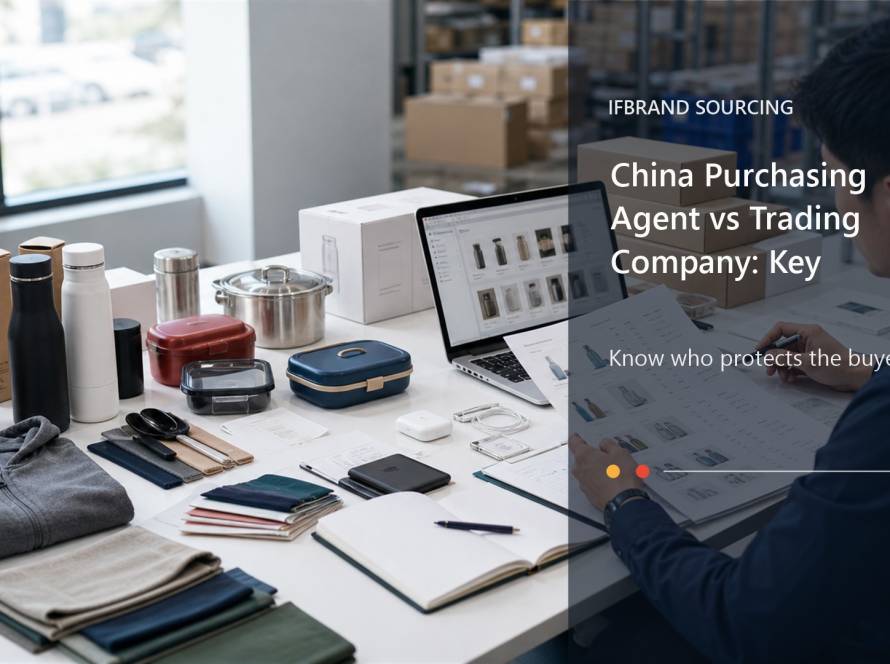

Updated: July 6, 2026. Author: IFBrand Sourcing editorial team. Review suggestion: have the checklist reviewed by a quality manager and adapt defect classifications to the exact product category before publishing.
Manufacturing quality control in China starts long before an inspector opens cartons. The strongest QC work happens when the buyer, sourcing team, and factory agree on specifications, materials, workmanship standards, packaging, labeling, and inspection rules before production begins. Without that agreement, final inspection becomes an argument about expectations instead of a decision based on evidence.
IFBrand Sourcing supports mass manufacturing, factory audits, sample organization, production setup, quality control, and shipping arrangements. Its public service pages describe checking supplier qualifications, production environment, in-house processes, defect rates, delivery performance, and order plans. This article turns those ideas into a practical QC guide for ecommerce brands sourcing private label or custom products from China.
Table of Contents
- Hot quality control topics in 2026
- QC starts with the specification
- Material and process controls
- AQL inspection and defect classes
- Category-specific quality examples
- Packaging and carton checks
- Pre-shipment decisions
- Who this approach is for
- FAQ
Hot Quality Control Topics in 2026
Platform-driven quality pressure: Amazon, TikTok Shop, Shopify brands, and retail buyers all face customer reviews and return costs quickly. A small defect rate can become expensive when the product is sold at scale.
Compliance documentation: Buyers increasingly need test reports, tracking labels, country-of-origin details, and packaging warnings. A QC report should not replace compliance work, but it should confirm that labels and documents match the shipped goods.
Smaller batch, faster reorder cycles: Many ecommerce brands avoid overstock by ordering smaller batches. That reduces inventory risk, but it also means factories may switch materials or lines more often. Clear golden samples and repeat-order QC records become more important.
QC Starts With the Product Specification
A factory cannot consistently produce what has not been clearly defined. A useful product specification includes drawings or reference images, dimensions with tolerance, material grade, finish, color reference, logo position, assembly method, packaging details, barcode requirements, carton markings, and any compliance requirements for the destination market.
For custom products, add a signed golden sample or approved pre-production sample. The sample should be labeled, photographed, and stored as the comparison standard. If the product uses tooling, record the mold number, cavity count, ownership terms, maintenance plan, and allowed changes. IFBrand’s product design review before tooling can help catch design-for-manufacturing issues before they become production defects.
Material and Process Controls
Many quality failures come from substitutions or process shortcuts. A plastic part may use a lower-grade resin. A fabric may shift in GSM or color lot. A metal finish may pass visual review but fail after humidity or abrasion. A carton may look acceptable but collapse during export handling.
Practical Material Checks
Ask the factory to confirm material source, grade, color method, and any test report that applies to the product. For silicone products, specify whether the product requires food-contact suitability, hardness range, odor expectations, and color tolerance. For apparel, confirm fabric composition, shrinkage, colorfastness, trims, labels, and measurement points. For electronics accessories, define functional testing, connector fit, labeling, and surface defect limits.
Process Controls During Production
For first orders, consider an inline production check once 10% to 30% of the goods are complete. This can catch wrong components, poor assembly, color variation, or packaging errors before the order is fully packed. Inline checks are especially useful for custom packaging, products with multiple accessories, and items that require manual assembly.
AQL Inspection and Defect Classes
AQL inspection is a common method for checking a production lot using a defined sample size. IFBrand’s FAQ says its QC checklist is based on AQL General Level II. Buyers who want the statistical background can refer to ISO 2859-1, which covers sampling procedures for inspection by attributes.
For day-to-day buying decisions, the key is to define defect classes:
- Critical defects: safety, legal, or usability failures that make the product unacceptable.
- Major defects: problems likely to cause returns, bad reviews, or product failure.
- Minor defects: small workmanship issues that do not affect function or typical customer acceptance.
A practical inspection checklist should include product appearance, dimensions, function, assembly, logo, labeling, accessories, packaging, carton markings, quantity, and workmanship. For Amazon FBA, add barcode scan checks, suffocation warnings when needed, carton weight limits, and packaging durability.
Category-Specific Quality Examples

Apparel and Textile Products
Check measurements at agreed points, stitching density, loose threads, stains, shade variation, fabric hand feel, label accuracy, care instructions, packing ratio, and carton assortment. Measurement tolerances should be defined by size and product type. A 1 cm variance may be acceptable for one garment area but unacceptable for another.
Kitchen and Silicone Products
Check odor, dust, flashing, deformation, color consistency, logo clarity, hardness, edge finish, pull points, and packaging contact marks. If the item is intended for food contact, the buyer should confirm applicable test requirements for the target market before production.
Electronics Accessories
Check charging or connection function, port alignment, button operation, indicator lights, cable strain relief, labeling, instruction sheets, surface scratches, and package contents. For products with batteries or wireless features, compliance and shipping restrictions must be clarified early.
Custom Packaging
Check paper thickness, print color, lamination, glue strength, dieline accuracy, barcode readability, insert fit, text spelling, warning labels, and master carton markings. Packaging is part of the customer experience, but it is also part of logistics. A beautiful retail box that crushes in transit still fails the job.
Packaging and Carton Checks
Packaging quality control should include both retail packaging and export cartons. Confirm inner bag, insert, retail box, label position, barcode, carton dimensions, gross weight, carton material, and pallet requirements if used. For ecommerce brands, the package may pass through factory handling, forwarder warehouse, export transport, destination warehouse, and final delivery. Each handoff adds risk.
When IFBrand manages warehousing and shipment coordination, carton data can be checked against the logistics plan earlier. This helps avoid surprises such as oversized cartons, overweight cartons, missing FBA labels, or packaging that does not match the freight quote.
Pre-Shipment Decisions
After inspection, the buyer should receive a report with photos, sample size, defect counts, test results, carton condition, and a clear pass, fail, or hold recommendation. A failed inspection does not always mean canceling the order. Sometimes the correct action is sorting, rework, replacement of defective units, repacking, or a second inspection.
However, buyers should be careful with repeated concessions. If the factory pushes to ship known major defects because the deadline is tight, the brand may pay later through refunds, bad reviews, platform complaints, or unsafe inventory. Quality decisions should protect the customer and the brand, not only the shipment date. For large production runs, IFBrand’s mass manufacturing support can help align supplier follow-up, inspection timing, and shipment planning.
Who This QC Approach Is For
This approach is suitable for ecommerce brands, Amazon sellers, Shopify brands, distributors, and DTC teams ordering private label or custom goods from China. It is especially useful for first-time suppliers, customized products, packaging-sensitive products, and orders where returns would be expensive.
It may be more than you need for very small sample orders, simple off-the-shelf goods, or low-value tests where the buyer accepts higher variation. It is not a substitute for category-specific compliance advice in areas such as food, medicine, medical devices, or products with strict safety regulations. For early supplier comparison, start with factory evaluation and product sourcing.
FAQ
What is the best time to inspect goods in China?
For new or custom products, inspect during production and again before shipment. For stable repeat orders, pre-shipment inspection may be enough if the supplier has a strong quality history.
What does AQL General Level II mean?
It is a commonly used sampling level for normal product inspections. The exact sample size depends on lot size and the selected acceptance limits for critical, major, and minor defects.
Can quality control eliminate all defects?
No. QC reduces risk and helps buyers make evidence-based decisions, but it cannot guarantee zero defects. Strong specifications, factory selection, process checks, and inspection all work together.
Who should define defect standards?
The buyer should define business and customer expectations, while the sourcing or QC team helps translate them into measurable inspection points.
What happens if an inspection fails?
Common actions include rework, sorting, replacement, repacking, discount negotiation, second inspection, or shipment hold. The right decision depends on defect severity and customer risk.