
Introduction
For Amazon FBA sellers and Shopify brand owners, plastic injection molding in China represents one of the most powerful cost advantages in e-commerce product development. China produces over 40% of the world’s plastic products, and injection molding costs run 30–50% lower than equivalent manufacturing in the US or EU. Whether you are producing smart home device housings, kitchen gadget handles, or custom home decor components, Chinese injection molding factories deliver the precision, scale, and material flexibility your brand needs.
Yet despite the cost advantage, many first-time importers make expensive mistakes. They skip DFM review, choose the wrong steel grade, or fail to specify mold ownership in their contracts. This guide walks you through every stage of plastic injection molding in China — from mold cost structures and material selection to quality control and defect prevention.
What Is Plastic Injection Molding?
Plastic injection molding is a manufacturing process in which molten plastic is injected under high pressure into a precision steel mold, cooled, and ejected as a finished part. The mold — also called a tool — is the primary capital investment. Once the mold is complete, each additional part costs only cents to produce, making injection molding ideal for medium-to-high volume consumer products.
This process is distinct from 3D printing, which suits prototypes but not scalable production, and from blow molding, which is used for hollow containers. With injection molding, you control the material, surface finish, color, and dimensional tolerance of every part — making it the preferred manufacturing method for private label products on Amazon, Shopify, and eBay, where product quality directly drives review ratings and repeat purchase rates.
Why China Dominates Global Plastic Injection Molding
China’s dominance in plastic injection molding is not simply a matter of labor cost. Several structural advantages make Chinese mold factories the preferred choice for e-commerce brands worldwide:
| Factor | China’s Advantage |
| Mold cost | 60–75% lower than US or EU equivalents |
| Equipment quality | Japanese CNC machines (Makino, Sodick) widely used |
| Steel sourcing | German steel (ThyssenKrupp) available at competitive prices |
| Turnaround speed | Simple molds completed in 15–25 days |
| MOQ flexibility | Production runs from 500 to 500,000+ units |
| Customization depth | Full control over material, color, finish, and tolerance |
Cities like Shenzhen, Dongguan, and Ningbo have entire industrial clusters dedicated to mold making and plastic manufacturing, allowing a sourcing agent to identify multiple qualified factories for any given product specification.
Step-by-Step Guide to Plastic Injection Molding in China
Step 1: Define Your Product and Mold Requirements
Before approaching any factory, you need a complete product brief. This includes 3D CAD files or detailed sketches, target material, wall thickness specifications, surface finish requirements, dimensional tolerances, and any assembly or functional requirements. Brands selling on Amazon must also consider FBA packaging dimension limits and applicable safety certifications — such as FCC for electronics housings or FDA compliance for food-contact plastic parts.
Successful product developers conduct DFM (Design for Manufacturability) review before finalizing their design. A DFM review identifies wall thickness inconsistencies, undercuts requiring side actions, and rib structures that prevent sink marks — catching expensive problems before the mold is cut.
Step 2: Find and Evaluate Mold Factories
Platforms like Alibaba and Made-in-China list thousands of Chinese mold factories. However, capability levels vary enormously. A structured factory evaluation should assess:
- CNC and EDM equipment brands and age
- Mold steel grades available (P20, 718, 718H, S136)
- Quality certifications (ISO 9001, IATF 16949 for automotive-grade)
- Sample molds and client references in your product category
- In-house T1 sampling capability and measurement equipment
Working with a professional sourcing agent like IFBrand Sourcing dramatically reduces risk at this stage. Our team conducts on-site factory audits and verifies equipment, certifications, and production capacity in ways that remote Alibaba searches cannot replicate. Learn more about our product sourcing and factory selection →
Step 3: Mold Design and DFM Optimization
Once you have selected a factory, the mold design phase begins. This includes mold flow analysis — a simulation that predicts how molten plastic fills the cavity and identifies potential defects before machining starts. IFBrand’s product design and DFM review process typically reduces T1 revision rounds by 40–60%, saving both time and cost.
Key DFM principles for e-commerce products include uniform wall thickness to prevent sink marks, draft angles of 1–3° for clean ejection, and rib structures instead of thick sections for structural strength without weight penalty.
Step 4: Mold Making and T1 Sampling
The mold making process follows a defined sequence: CNC roughing removes bulk material, CNC finishing achieves precision dimensions, EDM creates deep ribs and sharp corners, polishing achieves the specified SPI surface finish, and T1 sampling produces the first test shots for dimensional verification.
Simple molds take 15–25 days. Complex molds with side actions take 40–60 days. IFBrand provides weekly progress reports with photos throughout the entire mold making process.
Step 5: Production and Quality Control
Mass production without oversight is the most common source of injection molding failures for e-commerce brands. A Golden Sample — the approved reference part — must be confirmed before production begins. IFBrand implements a multi-stage quality control process covering:
- During-production inspection: at 30% and 70% completion
- Dimensional verification: CMM and calipers every two hours; tolerance ±0.1mm critical
- Surface quality inspection: visual check and light box, 100% of parts; no flash/sink/weld
- Color match: spectrophotometer per production run; Delta E < 1.5
- Pre-shipment inspection: AQL II standards before goods leave the factory
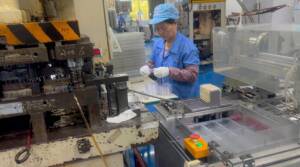
📸 [Image placeholder: IFBrand team inspecting injection molded parts — insert IFB QC photo. Alt: plastic injection molding China quality inspection]
Step 6: Shipping and Fulfillment
For Amazon FBA sellers, injection molded products typically ship by ocean freight due to their weight and volume. Ocean freight from China to the US costs $800–$1,500 per CBM depending on season and route. Your logistics partner should handle customs documentation, HTS code classification, FBA labeling, and carton preparation to Amazon’s strict inbound requirements. Explore IFBrand Sourcing’s shipping and warehousing solutions →
Understanding Injection Mold Costs in China
Mold cost is the primary capital investment in any injection molding project. Here is a complete breakdown by complexity:
| Mold Complexity | Cavities | Steel Grade | Cost (China) | Cost (US) | Savings |
| Simple (single cavity) | 1 | P20 | $1,500–$3,000 | $5,000–$12,000 | 60–75% |
| Medium (multi-cavity) | 2–4 | 718 | $3,000–$10,000 | $12,000–$35,000 | 65–75% |
| Complex (side actions) | 4–8 | 718H | $10,000–$25,000 | $35,000–$80,000 | 60–70% |
| High-precision (optic) | 2–4 | S136 | $15,000–$50,000 | $50,000–$150,000 | 60–70% |
Chinese mold factories using Japanese CNC machines and German steel produce molds that match US quality at a fraction of the price. IFBrand provides detailed mold quotes with transparent cost breakdowns and guarantees mold ownership for all clients.
Material Selection Guide: Choosing the Right Plastic
The material you choose determines your product’s performance, Amazon review rating, and manufacturing cost. Here is a practical guide to the most common injection molding materials for e-commerce products:
| Material | Key Properties | Common Amazon Products | Cost/kg | Shrinkage |
| ABS | Impact resistant, paintable | Electronics housings, tools | $1.50–$2.50 | 0.4–0.7% |
| PP | Lightweight, flexible | Containers, kitchen items | $1.00–$1.80 | 1.0–2.5% |
| PC | Transparent, tough | Protective cases, lenses | $2.50–$4.00 | 0.5–0.7% |
| PA66 / Nylon | Strong, wear-resistant | Gears, mechanical parts | $2.50–$4.00 | 0.8–1.5% |
| TPE / TPR | Soft, grippy | Grips, seals, overmolds | $2.00–$4.00 | 1.0–2.0% |
For Amazon smart home products, ABS is the default choice for housings. For Shopify kitchen brands, food-grade PP is essential. PC is ideal for transparent products. TPE overmolding adds soft-touch grips that justify premium pricing on Amazon listings. IFBrand’s engineers recommend the optimal material based on your product requirements and cost targets. See our product design and development services →
Quality Control for Injection Molded Parts
Poor injection molding QC directly causes Amazon returns and negative reviews. IFBrand catches these issues during production, not after. Here is the full QC framework we apply to every order:
| QC Check | Method | Frequency | Pass Criteria | Impact if Failed |
| Dimensions | CMM / Calipers | Every 2 hours | ±0.1mm critical | Assembly failure |
| Surface Quality | Visual + light box | 100% inspection | No flash/sink/weld | Customer returns |
| Color Match | Spectrophotometer | Per production run | Delta E < 1.5 | Brand inconsistency |
| Weight | Precision scale | Every 100 pcs | ±2% of target | Short shot / waste |
| Function Test | Application-specific | Per production run | 100% pass rate | Product failure |
Flash (excess material) indicates mold wear. Sink marks reveal wall thickness issues. Short shots mean incomplete filling. Color inconsistency destroys brand perception across Shopify and Amazon listings. See how IFBrand handles mass manufacturing oversight and our full manufacturing workflow →
Common Injection Molding Defects and How to Prevent Them
Understanding the most common defects helps you brief your factory and QC team correctly before production begins.
- Flash: Excess material escaping from the mold parting line. Cause: insufficient clamping force or worn mold. Prevention: regular mold maintenance and clamping pressure verification. Impact: customers see rough edges as poor quality.
- Sink Marks: Depressions on thicker wall sections. Cause: uneven cooling and material shrinkage. Prevention: uniform wall thickness and rib structures instead of thick sections. This is why DFM review is non-negotiable before mold cutting.
- Short Shots: Incomplete mold filling leaving missing sections. Cause: insufficient injection pressure or blocked vents. Prevention: proper venting design and verified injection parameters. A single short shot in an Amazon shipment can trigger a product safety complaint.
- Warpage: Product distorts after ejection. Cause: uneven cooling across the part. Prevention: optimized cooling channel design and uniform wall thickness. Warped products cannot be assembled and lead directly to Amazon returns.
📱 Social Media Insight: What’s Working Right Now
Manufacturing Transparency Sells. One of the most shareable content formats for product brands is process education — showing customers why S136 steel produces better surface finish than P20, or why mold flow analysis prevents sink marks before production starts. These posts consistently drive saves and shares on Instagram and Pinterest, and position your brand as an authority rather than just another Amazon reseller.
YouTube Case Study: IFBrand Sourcing’s YouTube channel recently published a full production walkthrough inside a Chinese injection molding factory — from 3D model to finished part. This type of behind-the-scenes content resonates strongly with Amazon sellers and Shopify brand owners on Reddit’s r/FulfillmentByAmazon and r/ecommerce communities.
🎬 Watch the IFBrand Sourcing YouTube channel for real sourcing case studies: youtube.com/@IFBrandSourcing-IFB
Common Mistakes to Avoid
Many brands damage their injection molding project before production starts by making predictable errors. The most damaging include:
- Skipping DFM review to save time, then paying for multiple costly T1 revision rounds
- Choosing mold steel grade based on price alone rather than product requirements and expected shot volume
- Failing to specify mold ownership in the purchase contract — leaving the factory in control of your tooling
- Accepting T1 samples with visible defects under schedule pressure
- Ignoring color consistency across production runs, which destroys brand perception on Amazon and Shopify listings
A subtler but equally serious mistake is neglecting to document the Golden Sample. Without a signed-off reference unit, disputes about production quality become impossible to resolve objectively. Always photograph and store the approved Golden Sample before bulk production begins.
The Role of a China Sourcing Agent in Injection Molding Projects
For brands managing their first or second injection molding project, a professional sourcing agent provides an asymmetric advantage. Rather than spending weeks navigating Alibaba factory listings, translating technical communications, and hoping that claimed equipment capabilities are accurate, an experienced agent like IFBrand Sourcing manages the full process: factory identification, on-site audit, DFM coordination, mold progress reporting, T1 sample evaluation, production oversight, QC inspection, and logistics.
This is not merely a convenience — it is a risk management tool. The cost of a sourcing agent fee (typically 5–10% of order value) is trivial compared to the cost of a rejected mold, a production run full of warped parts, or missing a peak season Amazon launch window. Explore our mass manufacturing services and our manufacturing workflow for full details.
Frequently Asked Questions (FAQ)
Q1: How much does an injection mold cost in China vs. the US?
Typical consumer product mold in China: $3,000–$10,000 versus US: $12,000–$35,000 — a saving of 60–75%. Simple single-cavity molds start at $1,500. Complex molds with side actions range from $10,000–$50,000. IFBrand provides transparent quotes with itemized cost breakdowns, and you own the mold. Contact us at ifbrandsourcing.com for a free quote.
Q2: What is the lead time for injection mold making in China?
Simple molds: 15–25 days. Medium complexity: 25–40 days. Complex molds with side actions: 40–60 days. These timelines include design, CNC machining, EDM, polishing, and T1 sampling. Add 5–10 days for T2 revisions if required. IFBrand provides weekly photo progress reports throughout.
Q3: What plastic material should I choose for my Amazon product?
Electronics housings: ABS. Food containers: food-grade PP. Transparent items: PC. Soft-touch grips: TPE. Structural mechanical parts: PA66/Nylon. Kitchen gadgets: PP or food-grade ABS. IFBrand’s engineering team recommends the optimal material based on your requirements. See our product design services for details.
Q4: Do I own the injection mold?
Yes — provided you specify mold ownership in your purchase contract. IFBrand guarantees mold ownership for all clients and manages all documentation. Molds can be transferred between factories if required. Never begin mold payment without a signed contract specifying ownership terms.
Q5: What surface finishes are available for injection molded parts?
SPI finishes range from A-1 to A-4 (mirror polish) through B-1 to B-3 (semi-gloss) to C-1 to C-3 (matte) and D-1 to D-3 (textured). Additional options include painting, electroplating, silk screening, pad printing, and IMD/IML. Premium finishes add 10–20% to part cost but significantly improve Amazon listing appeal. See our marketing and product photography services for post-production branding support.
Q6: How do I ensure quality across large production orders?
Golden sample approval, detailed QC checklist, during-production inspections at 30% and 70% completion, and pre-shipment inspection with AQL II sampling. Monitor injection pressure, melt temperature, and cycle time consistency throughout the run. IFBrand implements all these measures for every order. Learn more about our quality control process →
Conclusion
Plastic injection molding in China remains one of the most cost-effective paths to manufacturing high-quality consumer products for Amazon, Shopify, eBay, and Alibaba wholesale channels. Success requires disciplined DFM review, rigorous factory vetting, professional mold ownership documentation, and multi-stage quality control throughout production.
IFBrand Sourcing provides end-to-end injection molding management — from initial product design and DFM review and factory selection through production oversight, quality control, and shipping and warehousing to your fulfillment center. Our team has helped product brands across North America, Europe, and Australia bring precision plastic components to market with confidence.
📣 Join the conversation: Share your injection molding questions on Reddit’s r/FulfillmentByAmazon or r/ecommerce — and follow IFBrand Sourcing on YouTube for real-world manufacturing case studies every week.
Ready to start your injection molding project? → ifbrandsourcing.com
Document compiled by IFBrand Sourcing Content Team | ifbrandsourcing.com