
Introduction
Consumer electronics is one of the most dynamic and profitable product categories for e-commerce sellers — and one of the most technically demanding to source correctly. From wireless earbuds and smart home devices to USB charging hubs and portable power banks, Shenzhen and the Pearl River Delta remain the world’s undisputed epicenter for consumer electronics manufacturing. An estimated 90% of the world’s consumer electronics are manufactured in China, with Shenzhen alone housing over 30,000 electronics manufacturing enterprises.
For Amazon FBA sellers, Shopify brand owners, and businesses buying through Alibaba or AliExpress, sourcing consumer electronics from China offers extraordinary product access and cost advantages — but also carries unique risks. Certification failures, counterfeit components, electromagnetic interference issues, and battery compliance are hazards that can halt an entire Amazon ASIN, trigger customs seizure, or expose a brand to product liability. This guide provides a systematic framework for sourcing electronics from China safely, compliantly, and profitably.
Why Shenzhen Is the Electronics Sourcing Capital of the World
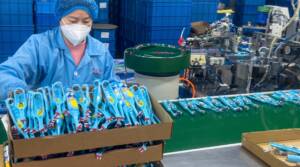
Shenzhen’s rise from a fishing village in 1980 to a global electronics manufacturing metropolis in four decades is one of the most remarkable industrial transformations in history. Within a 50-kilometer radius of Shenzhen’s Huaqiangbei electronics market, you can find suppliers for every component in a consumer electronics product: PCBs, microcontrollers, lithium-ion battery cells, Bluetooth modules, LED drivers, injection-molded enclosures, and finished product assembly.
| Advantage | Practical Impact |
| Rapid prototyping | Working electronics prototype in 7–14 days |
| Component flexibility | Engineer around supply shortages in real-time |
| Low tooling costs | Injection mold for enclosure: $3,000–$8,000 (vs. $15,000+ in the West) |
| Competitive unit pricing | 40–65% lower manufacturing cost vs. equivalent US production |
| Scale-up speed | Ramp from 1,000 to 50,000 units within a single production cycle |
Key Categories of Consumer Electronics for Private Label Sourcing
| Product Category | Avg. FOB Price Range | Key Certification | Top Platform |
| Bluetooth speakers | $8 – $25 | FCC, CE, RoHS | Amazon, Shopify |
| Wireless earbuds | $6 – $20 | FCC, CE, RoHS | Amazon, eBay |
| USB-C GaN charger | $4 – $12 | FCC, CE, UL | Amazon FBA |
| Power bank (10,000 mAh) | $7 – $15 | UN38.3, CE, FCC | Amazon, Shopify |
| Smart WiFi plug | $3 – $8 | FCC, CE, ETL | Amazon FBA |
| LED strip lights | $4 – $14 | CE, RoHS, UL | Amazon, Shopify |

Certification Requirements: The Non-Negotiable Foundation
Electronics sourcing failures are disproportionately caused by certification issues. Unlike apparel or kitchenware, consumer electronics must meet specific electromagnetic compatibility (EMC), electrical safety, and chemical compliance standards before legally entering the US, EU, UK, or Australian markets.
United States: FCC Certification
The FCC (Federal Communications Commission) requires certification for any device that emits radio frequency energy. FCC testing must be conducted at an accredited laboratory and can cost $800–$3,000 per product. All valid FCC certifications are searchable on the FCC Equipment Authorization Search database — always verify before accepting a supplier’s claimed certification: FCC Equipment Authorization Search →
European Union: CE Mark
The CE mark is mandatory for all electronics sold in the EU and covers electromagnetic compatibility (EMC Directive), low voltage safety (LVD), and radio equipment (RED Directive for wireless devices). CE testing costs €500–€2,500 depending on the product type.
Battery Safety: UN 38.3
Products containing lithium-ion or lithium-polymer batteries require UN 38.3 testing certification for air transport. Without it, your battery products cannot legally be shipped by air.
A qualified China sourcing agent should verify that all required certifications are valid, current, and issued for the specific product model — not a similar model from the same factory. IFBrand Sourcing handles certification verification as part of our Product Sourcing process →
Quality Control Specifics for Consumer Electronics
Electronics QC is more technically specialized than QC for physical goods. Beyond visual inspection, IFBrand Sourcing’s Mass Manufacturing oversight includes:
- Power-on and functional test — every unit activates and demonstrates core functions
• Charging safety test — chargers and power banks tested for overcharge protection and short circuit protection
• Battery capacity verification — power banks are notoriously misrepresented
• Packaging and accessory completeness — all accessories present and undamagedOur electronics QC checklist is based on AQL II sampling standards, ensuring defect rates stay below 1.5% before shipment.
Avoiding Counterfeit Components: A Critical Risk
One of the most serious risks in electronics sourcing from China is the use of counterfeit or substandard components — particularly integrated circuits (ICs), Bluetooth chipsets, and battery cells. A factory may win your initial sample order with genuine components, then substitute cheaper alternatives in mass production.
Warning signs include:
• Unit prices significantly below market benchmarks
• Suppliers unwilling to disclose component brands
• Functional inconsistencies between sample and production units
Requesting a Bill of Materials (BOM) from your supplier and having your sourcing agent verify key component brands during production inspection is the most effective countermeasure.
📱 Social Media Insight: Electronics Content That Drives Engagement
“Is It Real?” content performs exceptionally well. Videos showing the difference between genuine certified components and counterfeits — with visual proof — consistently go viral in the Amazon seller and Shopify brand owner communities on YouTube and TikTok.
YouTube Case Study: IFBrand Sourcing recently published “Why Most Suppliers Can’t Do This in 7 Days” and “7 Days to Meet EU Standards… Is It Possible?” — both directly relevant to electronics certification timelines. These real-world breakdowns are exactly the kind of content Alibaba buyers and AliExpress power users share in sourcing communities.
🎥 Watch the full series: youtube.com/@IFBrandSourcing-IFB
LinkedIn content idea: Post a breakdown of “5 FCC certification red flags every Amazon electronics seller should know” — this format consistently drives profile visits from procurement managers and brand owners.
Frequently Asked Questions (FAQ)
Q1: How do I verify that a Chinese electronics factory’s FCC certification is genuine?
All valid FCC certifications are searchable on the FCC Equipment Authorization Search database: fcc.gov/oet/ea/fccid → Look up the FCC ID provided by the supplier and verify that the listed grantee and product description match your product.
Q2: Can I modify an existing electronics product and keep the original certifications?
No. Any modification to a certified electronics product — including changes to enclosure design, antenna placement, PCB layout, or firmware — may invalidate the existing certification and require re-testing.
Q3: What is the typical lead time for consumer electronics from China?
Standard electronics production lead times are 30–50 days from order confirmation. Products with custom PCB designs or new firmware development may require 60–90 days. Sampling and design finalization add another 2–4 weeks.
Q4: Is AliExpress a reliable source for electronics samples?
AliExpress is useful for evaluating existing products and identifying potential manufacturers, but it is not a reliable sourcing channel for production orders. Prices on AliExpress include significant retail markup, and sellers are often trading companies rather than actual manufacturers. Use AliExpress for market research, then engage suppliers through direct B2B channels or a professional sourcing agent.
Q5: What are the most important quality tests for Bluetooth products?
RF output power compliance, audio frequency response, Bluetooth pairing range (minimum 10 meters for Class 2), battery life under real-world usage conditions, and sensitivity to electromagnetic interference from WiFi and LTE signals.
Q6: How do I protect my electronics product design from being copied by the factory?
Sign a comprehensive NDA and a product exclusivity agreement before sharing any technical documentation. Register your design patents in China (CNIPA) as well as in your home country. IFBrand Sourcing handles all IP protection documentation as part of our sourcing process.
Conclusion
Consumer electronics sourcing from China offers unmatched access to cutting-edge technology at globally competitive costs — but it requires technical diligence that exceeds what most e-commerce sellers apply to general merchandise. Certifications, component integrity, battery compliance, and functional QC are non-negotiable requirements for sustainable electronics businesses on Amazon, Shopify, and eBay.
IFBrand Sourcing specializes in electronics sourcing from China’s most capable manufacturing regions. Explore our Product Sourcing and Mass Manufacturing services to see how we support electronics brands end-to-end.
📣 Join the conversation: Discuss electronics sourcing challenges on Reddit’s r/FulfillmentByAmazon and r/hardware communities.
Ready to source your electronics product? Contact IFBrand Sourcing →
Document compiled by IFBrand Sourcing Content Team | ifbrandsourcing.com