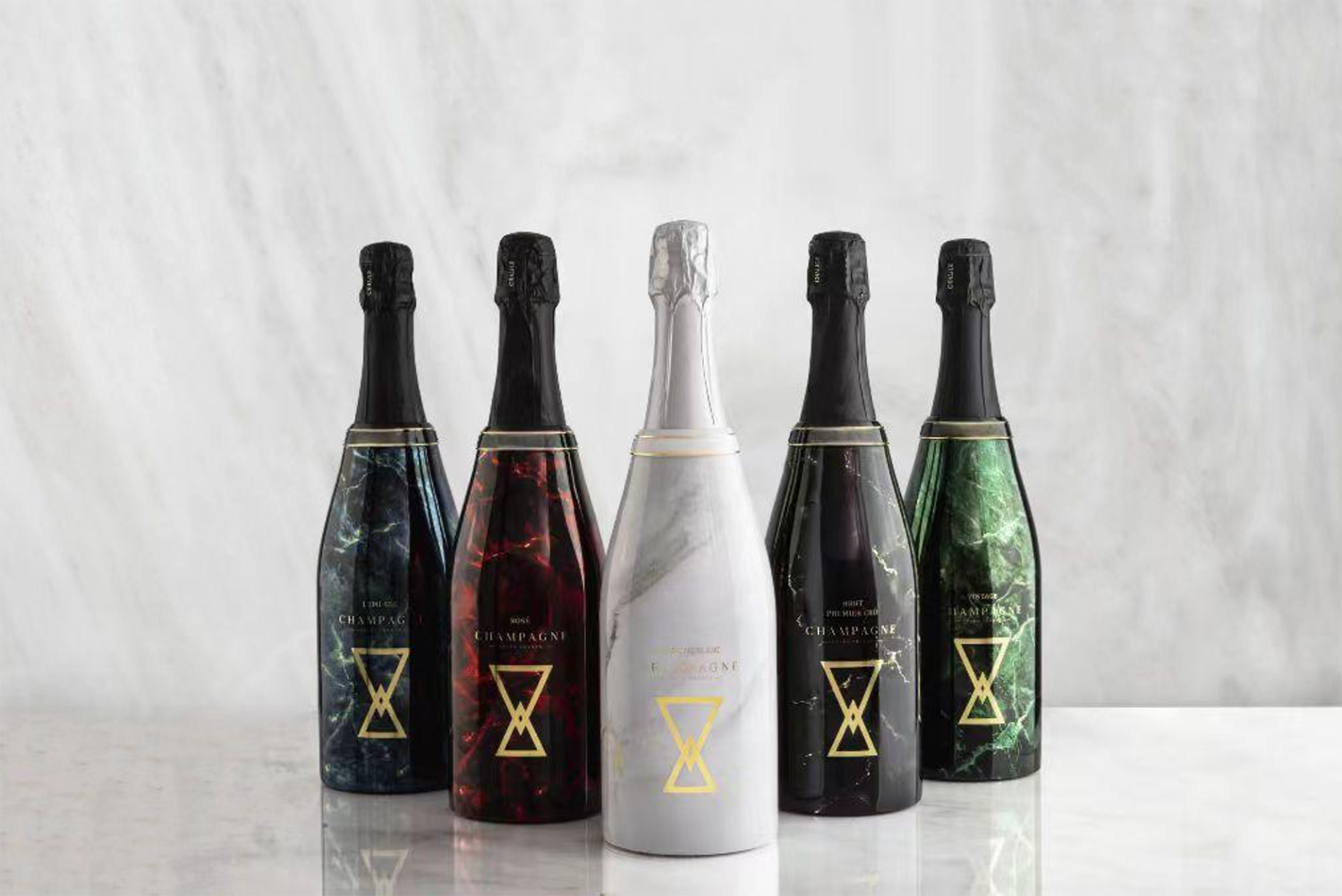
Project Overview
A renowned French champagne company recently inquired about decorative solutions from the UK’s leading surface treatment technology provider. Known for its premium quality, this technology allows for direct printing on glass with exceptional adhesion and no color limitations. For this project, however, the requirements were unique: the bottle’s sides and bottom needed to be encased in metal.
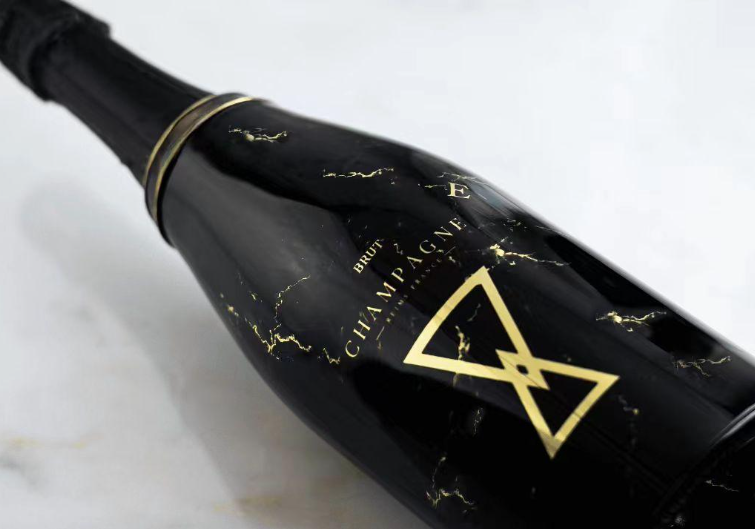

Our Approach
1. Initial Meeting and Requirements Discussion
To kick off the project, a meeting is scheduled to thoroughly discuss the requirements beyond the provided drawings. The discussion will focus on:
A. Background Usage: Understanding the context and purpose behind the bottle decoration.
B. End-User Positioning: Identifying the target audience and market positioning for the final product.
C. Feasibility of UK Assembly Processes and Technology: Evaluating the practicality and availability of assembly processes and technology in the UK.
D. Maximum Weight and Size Specifications: Defining the acceptable limits for the bottle’s weight and dimensions.
E. Finish Requirements: Detailing the desired finish and quality standards for the final product.
2. Acquisition of Physical Bottle Samples
Physical samples of the bottles will be obtained from the customer to ensure precise measurements and compatibility with the selected materials and processes.
3. Structure and Material Selection
A thorough analysis will be conducted to choose the optimal materials for the bottle’s structure and decorative elements, ensuring durability and aesthetic appeal.
4. Assembly Method Analysis
Different metal materials will be evaluated for their suitability, and various assembly methods will be analyzed to determine the most effective approach for integrating the metal elements with the glass bottle.
5. Cost Evaluation
A comprehensive cost analysis will be performed, considering all aspects of the project, from materials and production to assembly and finishing, ensuring the project stays within budget while meeting quality expectations.
Challenges and Solutions
This project presents several significant challenges. Firstly, the concept is entirely new, and we lack 3D drawings of the required parts, as well as detailed drawings of the existing glass bottle and material specifications. Our starting point is merely a physical glass bottle and a draft drawing, making it difficult to visualize the final product. Additionally, the requirement for a plastic-free design eliminates the possibility of using a solid structure of “plastic with steel,” which complicates the material selection process. The project also demands an easy assembly process with no post-processing required, further constraining our design options. The glass bottle’s tolerance is notably large, which poses difficulties in ensuring precise fittings for the metal components. Lastly, the text color of the finished products must be consistent with the base zinc-alloy color, adding another layer of complexity to the project’s execution.
Our Solution
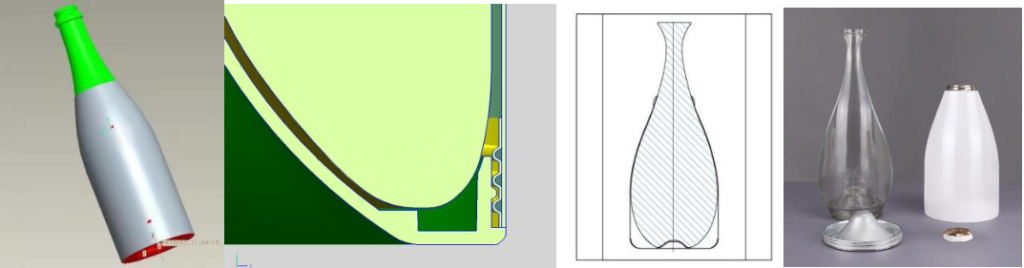
To address the challenges of this project, we implemented a comprehensive solution. First, we confirmed the manufacturing area, deciding on stainless steel for the sleeve and zinc-alloy for the neck ring and base. We conducted data scanning on the bottle to create precise drawings for the metal sleeve and base. A structural design drawing was developed for all parts, followed by 3D printing to test assembly. We compared quotations and conducted factory audits to select the most suitable manufacturer. Tooling was then created based on Design for Manufacture and Assembly (DFMA) principles. We conducted a T0 sample test to evaluate the overall structure and a T1 sample to confirm the finished product with surface treatment. A pilot run was carried out to test the mold, ensuring everything was in order before moving to mass production. Finally, we arranged for the mass production and delivery of the finished product to the UK.
Project Outcome
The project successfully delivered a robust and versatile solution:
- Enhanced Assembly: Metal screw teeth were welded between the sleeve and base, providing a strong fit that allows for easy assembly and disassembly without the need for additional tools.
- Added Durability: A gasket was integrated to provide both buffer and strength, ensuring the longevity and reliability of the final product.
- Refined Surface Treatments: Two types of surface treatments were applied after high polishing to meet the printing design requirements:
- Special coating process in white with hot foil for texts.
- Electroplating process in gold.
- Improved Efficiency: The customer benefited from five distinct designs for their end client, significantly reducing their own production costs by eliminating multiple processes and tripling their original production capacity.